


What is Lean?
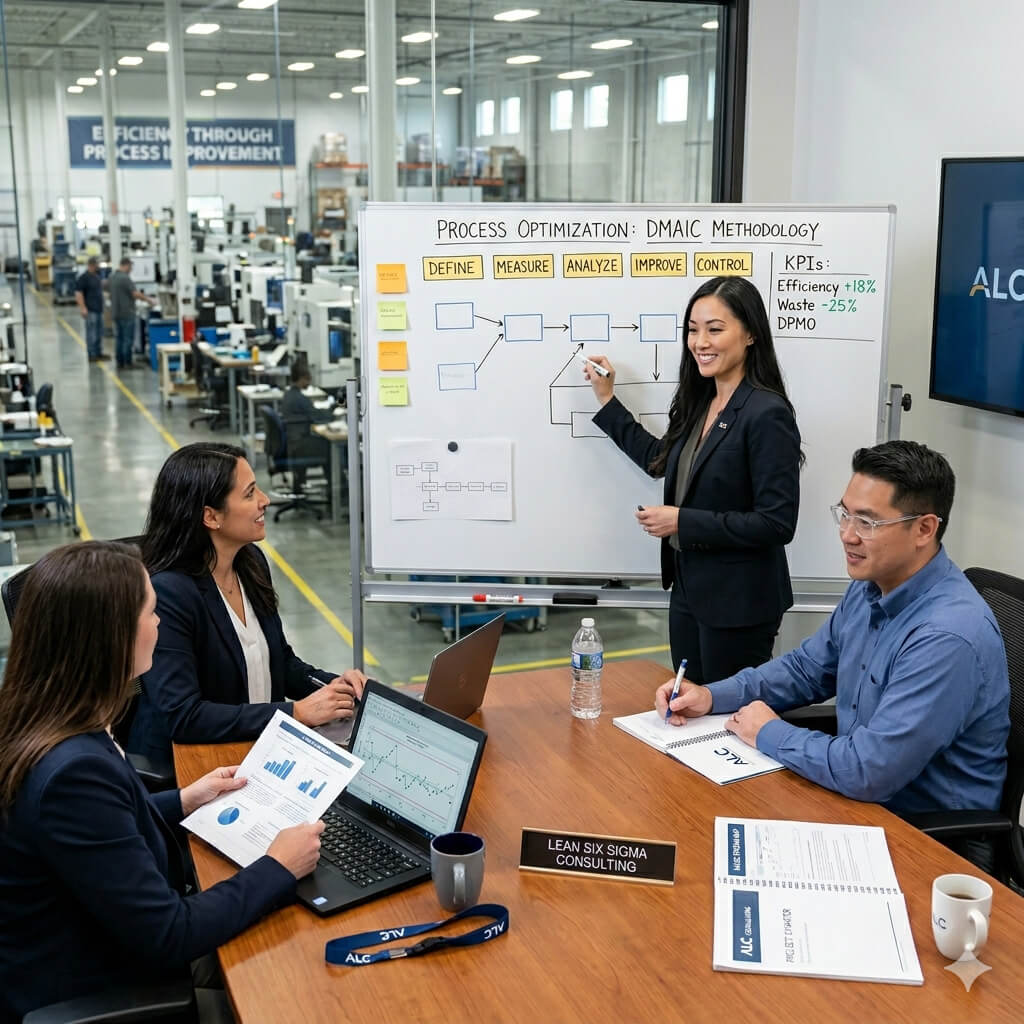
Lean Six Sigma is an operational improvement methodology that combines Lean Manufacturing (eliminating waste and improving process flow) with Six Sigma (stabilizing processes and reducing defects through data-driven approaches).
Lean helps businesses eliminate common forms of waste such as waiting time, excess inventory, unnecessary transportation, excessive motion, and overproduction. Meanwhile, Six Sigma enables organizations to control process variation through analytical methods such as DMAIC and Statistical Process Control (SPC).
When implemented effectively, Lean Six Sigma helps businesses:
- Increase operational speed
- Reduce defects and quality-related costs
- Shorten delivery lead times
- Strengthen internal management capabilities
This is why the methodology has been adopted by leading global corporations such as Toyota, GE, Bosch, and Samsung as a core foundation of Operational Excellence.
More importantly, Lean Six Sigma is not just a collection of improvement tools — it is a management system that enables businesses to build continuous improvement capabilities and make data-driven decisions.
Practical Benefits of Implementing Lean Six Sigma
Businesses that implement Lean Six Sigma consulting projects with the right methodology often achieve measurable results such as:
- Factory productivity improvement: +8% to +25%
- Quality defect reduction: 20% to 30%
- Lead-time reduction: 20% to 45%
- Inventory reduction and cash flow improvement: 5 to 15 days
- Enhanced middle-management capability
More importantly, Lean Six Sigma helps businesses shift from improvement efforts that depend on individuals to a structured improvement system, ensuring that results are sustainable and knowledge remains embedded within the organization.
Why Do Many Lean Six Sigma Projects Fail?
Many Lean Six Sigma programs fail to deliver results because:
- They are implemented as trends rather than aligned with business objectives
- The focus is on tool training instead of solving real operational problems
- Middle management is not actively involved — only consultants and top management participate
- Internal capabilities are not developed
- Financial impact is not measured
Result: companies receive training, but no real operational outcomes.
What Makes ALC Different?
ALC implements Lean Six Sigma based on the philosophy:
“We do not do the work for businesses — we enable businesses to do it themselves.”
Our approach includes:
- Starting from real business challenges (productivity, quality, lead-time)
- Working directly on-site using the Gemba approach
- Coaching teams through real improvement projects
- Transferring methodologies instead of only providing training
- Ensuring measurable results
ALC is not a consulting firm that simply produces attractive reports. We work alongside businesses at the operational level until tangible results are achieved.
When Should a Manufacturers Implement Lean Six Sigma?
Businesses should consider implementation when they experience signs such as:
- Productivity does not improve despite investments
- High or unstable defect rates
- Lead times longer than competitors
- IE (Industrial Engineering) teams are not strong enough to support production lines
- Improvement activities are fragmented and fail to create significant impact
If your business is facing one or more of these challenges, a Lean Six Sigma consulting project can create a major transformation in operational performance.
Why Do Businesses Choose ALC?
More than 30% of ALC’s projects come from referrals by previous clients — reflecting the effectiveness of our implementation approach and the trust we have built.
ALC has implemented improvement programs for factories across industries such as:
- Textile & Garment
- Plastics
- Packaging
- Medical Devices
- Wood & Furniture
Instead of providing broad and generic consulting, ALC focuses on solving the most critical operational challenges affecting business competitiveness:
- Productivity Boost: Restructuring production flow and optimizing line balancing methods to maximize output using the same workforce resources.
- Quality & Process Stability Control: Applying SPC and DMAIC methodologies to eliminate process variation, minimize defect rates, and protect brand reputation.
- Lead-time Reduction: Removing bottlenecks and improving cross-functional coordination to help businesses respond faster to urgent orders while reducing inventory costs.
IE (Industrial Engineering) Capability Development
Building or standardizing engineering teams — the “brain” behind efficient factory operations. - Practical Process Standardization: Closing the gap between “procedures on paper” and actual operations, ensuring employees understand and execute processes correctly from the start so systems can operate sustainably.
- Manufacturing Workforce Optimization: Addressing workforce fluctuation challenges while establishing training systems and KPI performance evaluations based on real operational data.
Start Your Improvement Journey with ALC
ALC can quickly support businesses through an on-site Operational Assessment to:
- Identify key bottlenecks
- Evaluate improvement potential
- Propose a fully customized roadmap